
Design Leadership
I’m on a mission to simplify the complex and make what’s easy, memorable.
As designers, our superpower is to “inspire”. We have the ability and tools to visually provoke what's possible, connect seemingly impossible dots, giving our peers and colleagues something to engage with, respond to, and align towards.
My leadership approach
-
Inspire with vision
-
Align through compelling narrative
-
Deliver for impact

Envision the ‘impossible’


“An idea is powerless if it stays inside you… if you communicate an idea in a way that resonates, change will happen.”
- Nancy Duarte
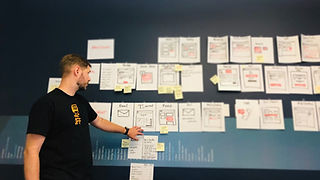


The job is about people, relationships and communication
My Process: Innovation Through Story

The Q.U.E.S.T. Method
I created a new take on Design thinking based upon a single, provocative question–how could traditional methods be tweaked to be more accessible and drive greater user impact?
Armed with three decades of experience starting, failing, launching, and shelving great ideas, I leaned into the power of storytelling to help align with a shared understanding of their problem and opportunity, all with a heavy emphasis on users. The resulting five-stage and self-guided process helps teams or individuals avoid common blindspots while leveraging practices proven by some of the leading tech companies.
Customer Benefits

Design for ‘Jobs to be Done’

Milestones for Design quality

Execute with velocity towards a target state

Innovation = Process & Rigor > Flash of Genius
Rythms and Culture
Consistent Team Meetings
Foster predictability, culture of continual improvement, and ensure alignment. Promote consistent communication with daily stand-ups, weekly design reviews, peer reviews, and design forums
Mentorship and Growth
Foster professional growth, increase team morale, and reduces attrition.
Goal Tracking
Provide visibility, accountability, and a sense of accomplishment
Recognition & Celebration
Acknowledge and celebrate individual and team achievements. Boost morale, motivate designers, and reinforce positive behaviors
Knowledge Sharing
Ensure knowledge is accessible, promote consistency, and prevent information silos
Customer Driven
User Research Integration
Ensure designs are user-centered and address real user problems. Collect and analyze user feedback from various channels (e.g., surveys, support tickets, user testing)
Data-Driven Decisions
Use data and analytics to inform design decisions and measure the impact of design changes. Track key metrics, analyze user behavior, and conduct A/B testing.
User Empathy
Encourage designers to immerse themselves in the user's world through user personas, journey maps, and empathy mapping.
Bar-Raising Craft
Push boundaries
Encourage designers to explore new ideas, experiment with new technologies, and push the boundaries of design.
Design Quality
Establish and maintain high standards for design quality, ensuring that designs are visually appealing, user-friendly, and technically sound.
Design System Excellence
Maintain and evolve a robust design system that promotes consistency, efficiency, and scalability.